TL;DR
- Bulk litho printing looks cheaper per card on the quote. Once warehousing, insurance, obsolescence and write-offs are counted, it frequently isn't.
- Three numbers make the case: 3.30×, 4.28g, 10–12 days.
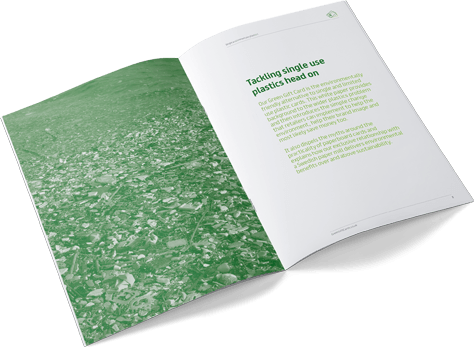
- The full argument is in our white paper, The Total Cost of "Cheap" — free, no form, no email address. Download it here.
Bulk gift card printing is not the cheaper option it appears to be on a quote.
The substrate war is over — paperboard won, and roughly 95% of the UK gift card market has moved to board. The next argument isn't what cards are made from. It's how they're made, and whether the way most programmes still buy cards is quietly costing them money nobody is putting on a spreadsheet.
Three numbers from the paper:
- 3.30× — what litho has to physically manufacture to fulfil a typical short-run order. 70% of everything it prints is never sold.
- 4.28g vs 8.14g CO₂e — digital against litho, per card, on identical board. Independently assured by CarbonQuota.
- 10–12 working days — digital, end-to-end, against roughly 4 weeks for a comparable litho run.
What's in the white paper
18 pages, and it argues the whole thing rather than the flattering half:
- The quote is the wrong number. Storage, insurance, obsolescence, forecast error — where the real cost of a "cheap" card actually lands, and why finance and procurement answer this question differently.
- The CFO's version of the question. A forecast-based order is cash paid in full, months before a card sells. Treasury management, not print buying.
- What book publishing worked out a decade ago. Print-on-demand won on identical economics. Card programmes are earlier on the same curve.
- The manufacturing multiplier, with the workings. Two live UK litho quotations, and the full exhibit behind the 3.30× and 1.74× figures.
- The technology that changed it. Digital print at 660 micron — the caliper we actually specify for cards — matte finish indistinguishable from litho, and variable data printed inline rather than as a separate offline pass.
- Proof it works. Clarins: 84 variants from four designs, two demand-sized runs, zero excess inventory.
- The argument against us. Card mall replenishment is a real counterpoint, and we make it properly rather than waving it away.
It's free to download, share, quote and challenge. No gate.
> Download the white paper
If you think the total cost of ownership case doesn't hold for your programme, we want to hear why. Get in touch and tell us.
FAQs
Is it cheaper to print gift cards in bulk?
For a job with multiple designs or versions, no — digital is cheaper on price alone, at any volume, because litho's make-ready cost is charged against every version. For a single unchanging design, digital stays price-competitive to around 20,000 units; above that litho usually has the lower raw print price, and the case for digital rests on total cost of ownership, waste and carbon instead.
What is the minimum order for digitally printed gift cards?
Short-run digital removes traditional minimum order quantities. Runs are sized to actual sell-through rather than a forecast, so there's no fixed MOQ to hit.
How long does gift card printing take?
Around 10–12 working days for a digital paperboard run against roughly 4 weeks for a comparable litho run. Litho's lead time doesn't change on paperboard or PVC — it's the print method, not the substrate, that sets the speed. Both figures are end-to-end production: printing, punching to card shape and personalisation, not just time in a print queue.
Which is greener, litho or digital printing?
Digital. On identical board, digital produces 4.28 gCO₂e per card against litho's 8.14, independently assured by CarbonQuota.
How many extra cards does litho have to print to fulfil an order?
On a typical short run (around 1,243 cards per version), litho must physically manufacture about 3.30× the order — 70% of what's printed is never sold. Even on a 100,000-card long run the ratio is 1.74×. Figures are from two live UK litho production quotations obtained directly by Green Gift Cards from its own approved suppliers, held on file and available for verification on request.
What happens to unsold gift card stock?
It's warehoused at cost, then written off once terms, branding or promotional offers change — a cost the original unit price never showed.